


 Call Us Today
Designing a Silent HVAC System for Your O’Fallon Dream Home
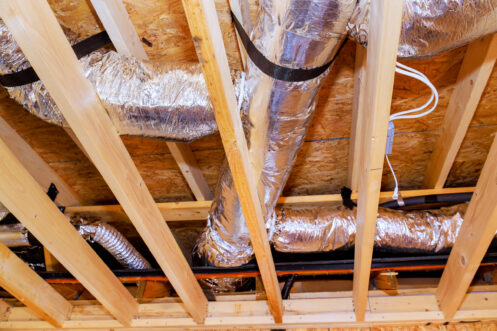
When planning a custom home, every detail matters. From the foundation to the finishes, you make countless decisions to create a space that is efficient, beautiful, and comfortable. Many homeowners and developers in O’Fallon focus on energy ratings and thermal comfort but often overlook a critical aspect of home life: HVAC noise.
This detail often goes unnoticed until you move in, when a constant hum or whoosh can detract from the peaceful sanctuary you’ve worked so hard to build. While no heating and cooling system is completely silent, thoughtful design choices made during construction can dramatically reduce operational noise throughout your home.
The key to achieving a quiet home environment is integrating the HVAC system into the home’s architecture from the very beginning. This proactive approach ensures that comfort is something you feel, not something you hear. For those embarking on a new home build, this is the perfect opportunity to design a system that delivers ideal temperatures with minimal sound.
Where HVAC Noise Comes From
Understanding the origins of HVAC noise is the first step toward mitigating it. A system’s sound profile is a combination of mechanical operation and air movement. When our NATE-certified technicians design a new construction HVAC system, we consider every potential source of noise to create a comprehensive plan for quiet operation.
The sounds you hear from your heating and cooling system typically involve a combination of factors. Identifying these sources allows for targeted solutions that address the root cause of the noise rather than just masking the symptoms.
- The indoor unit’s blower fan and motor
- The outdoor unit’s compressor and fan
- Air moving quickly through ductwork
- Vibrations traveling through the home’s structure
Why HVAC Design Matters More Than the Equipment Itself
Many people believe that the secret to a quiet HVAC system is to purchase a unit with the lowest decibel (dB) rating. While high-quality equipment certainly helps, it’s only one piece of the puzzle. The overall system design often has a far greater impact on the final sound level in your home. A premium, ultra-quiet unit connected to poorly designed ductwork will still be noisy.
Properly engineered new construction HVAC plans focus on the system as a whole. This includes calculating the precise heating and cooling load for your home, designing a ductwork layout that promotes smooth airflow, and balancing the system to ensure each room receives the right amount of conditioned air without strain. When airflow is unrestricted and balanced, the system doesn’t have to work as hard, and this reduces both noise and energy consumption. This holistic approach is where an experienced design team comes in.
Design Choices That Make a Noticeable Difference
During the new home construction phase, you have a unique opportunity to make smart design choices that will pay dividends in peace and quiet for years to come. These decisions are far more difficult and costly to implement in an existing home.
Properly Sized Ductwork and Lower Air Velocity
The size and layout of your ductwork are arguably the most critical factors in controlling airflow noise. Undersized ducts force air to move at a high velocity, creating a constant and intrusive whooshing sound.
Our design philosophy is to use ducts that are generously sized for the required airflow. This allows the air to move at a lower, quieter velocity while still delivering the comfort you need. We also specify smooth, gradual turns instead of sharp angles to prevent air turbulence and the noise it creates.
Strategic Equipment Placement Inside and Outside the Home
Where you place your HVAC equipment is another crucial decision. We work with builders to place the indoor air handler or furnace in a location that is buffered from main living areas, such as a dedicated mechanical room in the basement or a well-insulated attic space. We recommend placing the outdoor unit away from bedroom windows, patios, and other outdoor living spaces to minimize its impact on your daily life.
Vibration Isolation and Flexible Connections
Even the quietest units produce some vibration. To prevent this mechanical energy from transferring into your home’s structure, we incorporate several sound-dampening techniques. This includes placing the air handler and outdoor unit on thick, anti-vibration pads. We also use flexible connections between the main unit and the rigid ductwork, which act as a break to stop vibrations from traveling down the metal ducts and amplifying throughout the house.
Choosing the Right Equipment for a Quieter Home
After optimizing the system design, selecting the right equipment further enhances quiet operation. Modern HVAC technology offers fantastic options that run more quietly and efficiently than older systems. As a Lennox Premier Dealer, we offer top-tier equipment designed for superior comfort and minimal noise.
Variable-speed and two-stage systems are excellent choices for homeowners prioritizing quiet. Unlike single-stage systems that run only at 100% capacity, these advanced appliances can adjust their output to match the home’s real-time needs. This means they spend most of their time running at lower, longer, and significantly quieter cycles.
The constant, gentle circulation also improves air filtration and reduces temperature swings. A professional AC installation expert can help you select a system that matches your home’s design and meets your family’s needs.
Why Retrofitting for Quiet Operation Is More Difficult
Addressing HVAC noise in an existing home is possible, but it is often much more complex and limited. Once the drywall is up, accessing and modifying ductwork becomes a major renovation project. Relocating an indoor system could require significant structural and electrical changes. The golden opportunity to build a quiet system from the ground up exists during the new home HVAC planning phase.
New construction allows for ideal duct routing, perfect placement of return air grilles to minimize noise, and ample clearance around equipment for service and sound dampening. Trying to achieve the same results later can be disruptive and far more expensive.
Build Quiet Into Your HVAC System From Day One
Achieving a truly quiet and comfortable home requires a collaborative effort. It’s a process that involves the homeowner, the builder, and an experienced HVAC design and installation team working together from the earliest stages of planning. Simply selecting the most expensive equipment off a shelf is not a strategy for success. The quietest systems result from expertise, careful calculations, and a commitment to quality installation.
Since 1983, our family-owned business has partnered with homeowners and builders to create custom comfort solutions. Our goal is to ensure your new home’s HVAC system performs flawlessly and almost silently, allowing you to enjoy your space without distraction.
Plan for Comfort You Can Feel, Not Hear
Building your dream home is an exciting journey, and the comfort system you choose is at the heart of your daily experience. By focusing on smart HVAC design principles from the start, you can make your home a peaceful retreat from the outside world. From properly sized ductwork and strategic equipment placement to advanced variable-speed technology, every decision contributes to a quieter, more comfortable environment.
Don’t let HVAC noise be an afterthought. If you are planning a new home in O’Fallon, MO, or our surrounding service area, partner with the experts at Hoff Heating & AC. Contact us today to start designing a heating and cooling system that delivers ultimate comfort in peaceful silence.